
This is a topic that has somehow kept coming up in conversations over the past few months, particularly with people who know enough astrology or Qi Men Dun Jia to actually use these systems in their everyday lives.
At first, the questions seem harmless enough. Is today a better day to do this? Should I wait until another date? Is this direction better? Should I schedule this meeting at a particular hour? Is this a good day to make a purchase? What does the chart say about this decision?
I understand why people do it. If you have access to a system that can offer information about timing, tendencies, favourable conditions or potential obstacles, naturally there will be a temptation to use that information. We already check weather forecasts before travelling, read reviews before booking hotels, compare interest rates before taking loans and look at traffic conditions before deciding which route to take, so I don’t think there is anything inherently wrong with using metaphysical information as another layer of consideration.
What I’ve been thinking about instead is where we draw the line, because after hearing variations of the same questions repeatedly, I started wondering at what point using metaphysics as guidance quietly crosses over into needing metaphysics in order to make a decision at all.
And perhaps the more interesting question underneath all of this is: why are we so afraid of making the “wrong” decision?
Why Do We Need to Optimise Everything?
We already live in a culture that encourages us to optimise almost every aspect of our lives. We optimise our sleep, workouts, diets, finances, productivity, travel itineraries and morning routines, so perhaps it isn’t surprising that this mentality eventually finds its way into spirituality and metaphysics too.
Once you understand that there are supposedly more favourable dates, timings, directions or energetic conditions available to you, it can become very tempting to believe that every decision has an optimal answer somewhere and that your responsibility is to uncover it before you act.
I sometimes wonder whether this obsession with optimising every decision is really about wanting the best outcome, or whether it is an attempt to avoid the discomfort of knowing that we can make a perfectly reasonable decision and still end up disappointed.
There is something deeply uncomfortable about accepting that no amount of preparation gives us complete control over what happens next, and perhaps consulting another chart, another timing or another system gives us the temporary reassurance that there is still a “correct” answer somewhere if only we look hard enough.
But life doesn’t really work with that level of precision, does it? 🙂
You can choose an auspicious date and still encounter problems. You can make a sensible decision based on everything you knew at the time and discover later that things did not unfold the way you expected. You can also make what appears to be a terrible decision and realise years later that it redirected your life toward something you could never have anticipated.
There are simply too many variables involved in being human for us to optimise every outcome. At some point, the pursuit of the “best” decision can become another way of trying to control uncertainty.
Wanting reassurance before making a difficult decision is incredibly human, and most of us seek it somewhere. We ask our friends, our partners and our families. We Google endlessly, read Reddit threads, pull tarot cards, check astrology transits, cast a Qi Men chart, or ask five different people the same question until somebody finally gives us an answer that makes us feel comfortable. (sounds familiar?)
The tool itself isn’t really what interests me here. I’m more interested in the relationship we develop with it. If looking at a chart helps you notice something you had overlooked and you are still comfortable making the final decision yourself, then the tool has probably supported your judgment. If you gradually become uncomfortable making decisions without consulting something outside yourself first, then I think it is worth examining what has changed. Because strangely enough, you can accumulate more and more information while becoming less and less confident in your ability to decide.
You can become extremely knowledgeable about systems of guidance while slowly losing trust in your own ability to navigate uncertainty, and I don’t think that is what any of these systems are ultimately meant to do.
Some Decisions Should Simply Belong to Us
Personally, I don’t see much value in consulting metaphysics for ordinary decisions where the consequences are relatively small and reversible.
If I choose the wrong restaurant, buy something I later regret, schedule a meeting on a supposedly less favourable day or take a trip that turns out differently from what I imagined, life goes on. I would rather make those decisions using common sense, preference, experience and whatever practical information I already have, because I think there is value in exercising that muscle too.
Sometimes choosing for yourself is part of the practice.
You consider what you know, make the best decision you can with the information available at that moment, and allow yourself to find out what happens next. Sometimes you’ll be pleased with the outcome, sometimes you’ll realise you misjudged something, and most of the time the consequences probably won’t be nearly as significant as you imagined beforehand.
And this process is how discernment develops. We learn to trust ourselves partly through making decisions and discovering that we are capable of handling what follows, including those occasions when our decisions don’t produce the outcome we hoped for. If every moment of uncertainty is immediately outsourced to a system, we lose some of the opportunities that allow that confidence to develop in the first place. I think this is particularly important for people who practise astrology, tarot or metaphysics professionally, because knowing how to consult a system also means knowing when there is no real need to consult it.
So When Would I Actually Consult?
This is where I personally draw the distinction. I find metaphysical consultation much more meaningful when I am dealing with something consequential enough that additional perspective could genuinely help me understand the situation, particularly when there are several competing considerations or when I am standing at a major turning point in life.
A major career change, starting or closing a business, relocating to another country, entering an important partnership, choosing an auspicious date for a culturally significant event, or trying to understand a prolonged period of uncertainty are very different from wondering whether Tuesday or Thursday is the better day to buy something.
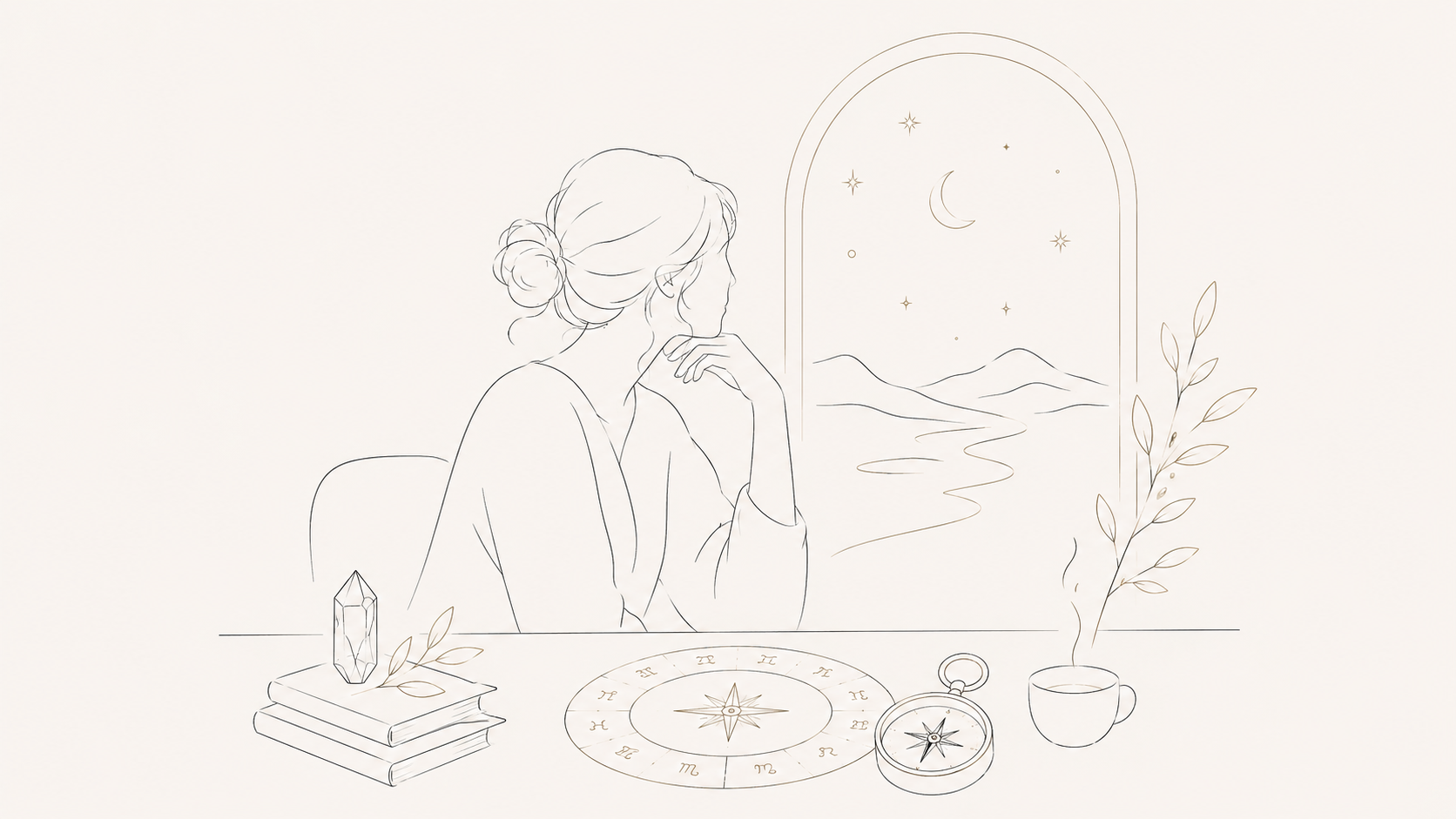
Even with those larger decisions, I don’t believe astrology or Qi Men should be responsible for making the choice. I have always thought of astrology as a map and tarot as a compass, and I think the same philosophy can be extended to other metaphysical systems. A map can tell you something about the terrain ahead. A compass can help you orient yourself when you feel lost but neither exists to make every turn on your behalf.
If I were considering leaving a career, for example, astrology might help me understand why questions around work, identity or direction are becoming particularly prominent during that period of my life. Qi Men might offer another perspective on strategy or timing. Tarot might help surface something about my own motivations that I haven’t consciously acknowledged yet.
All of that information can be useful, but I would still need to consider whether I have sufficient savings, what opportunities are realistically available, what responsibilities I carry, what alternatives exist and, perhaps most importantly, whether I actually want the life that follows that decision.
Metaphysics gets a seat at the table. I just don’t think it should always sit at the head of it.
What If There Is No “Best” Decision?
Perhaps one of the hardest things to accept about adulthood is that there are decisions where no option comes with certainty and no amount of analysis will reveal which path ultimately produces the “best” life. We tend to judge our past decisions according to their outcomes. Something worked out, therefore we tell ourselves we made the right choice. Something became painful or difficult, therefore we assume we chose wrongly.
I don’t think life is always that straightforward. A relationship can end and still have been meaningful. A business can fail and still fundamentally change your understanding of yourself. A job you thought was perfect can teach you exactly what you never want to do again. A decision that creates difficulty can eventually redirect you toward a life you would never have reached through the safer option.
Sometimes the path only makes sense backwards and if our goal becomes avoiding every difficult outcome, every regret and every possibility of choosing wrongly, I wonder whether we eventually become so preoccupied with managing life that we forget to actually participate in it.
There is a difference between wisdom and control, although the two can look surprisingly similar from the outside. Consulting a system because you want another perspective is one thing while feeling unable to move until the system reassures you that movement is safe is another.
We Cannot Remove the Risk of Being Alive
This is probably where my own relationship with astrology, tarot and metaphysical systems has settled over the years. I value these tools enormously and I wouldn’t continue studying or practising them if I didn’t believe they could offer meaningful insight, but appreciating a tool also means understanding its limits.
There will always be decisions made with incomplete information. There will be conversations whose outcomes we cannot control, opportunities that arrive at inconvenient times, people who surprise us, plans that collapse and moments when we simply have to choose without knowing whether our future selves will eventually feel grateful or regretful.
No chart can completely remove that uncertainty, because uncertainty is part of being alive.
I don’t think developing discernment means reaching a point where we somehow stop making mistakes. To me, it looks more like becoming capable of making thoughtful decisions with the information available to us, while accepting that we cannot control everything that follows.
Perhaps this is also where our relationship with metaphysical practice becomes more mature, because instead of constantly asking, “How do I make sure I choose the best possible outcome?“, we begin asking, “What information would genuinely help me understand this situation more clearly, and what part of this decision still belongs to me?”
This distinction may seem small, but I think it changes our entire relationship with guidance.
Astrology can show us patterns. Qi Men Dun Jia can offer another lens through which we consider strategy and timing. Tarot can surface perspectives and questions that we may not have consciously considered. They can help us see, reflect, prepare and orient ourselves, while the responsibility of actually choosing and living with those choices remains ours.
There is something valuable about occasionally choosing without perfect certainty, discovering what happens, adjusting when necessary and eventually realising that even when we make a decision that doesn’t work out the way we hoped, we are still capable of navigating whatever comes next.
Maybe the goal was never to become so good at reading the signs that we stop making “wrong” decisions.. maybe it is to become someone who trusts herself enough to live without needing every decision to be the right one.