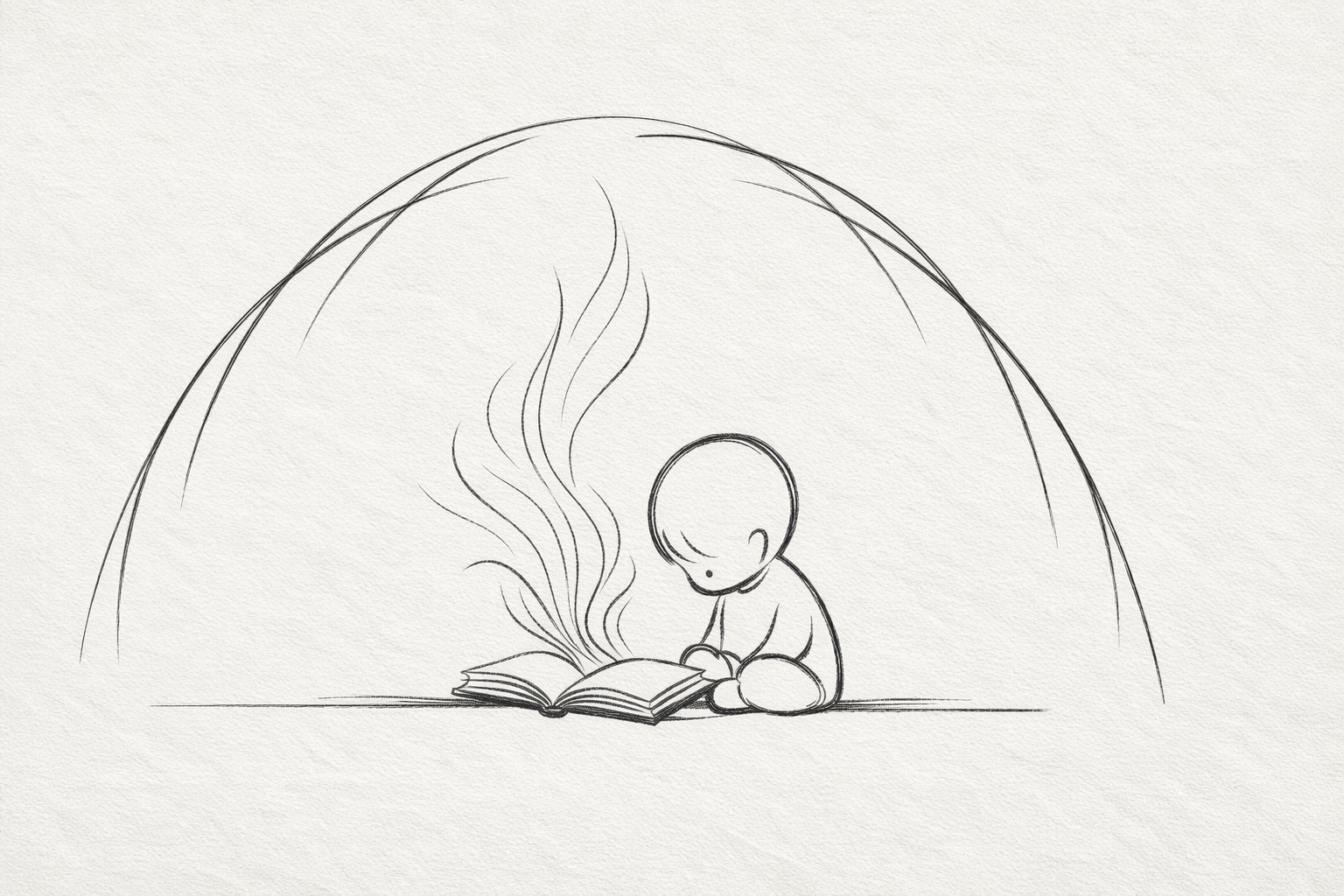

Long before astrology, tarot, or any of the work I do today, there were books. Looking back, I think reading was probably the first place where I felt understood.
I don’t remember exactly when it began. What I do remember is spending an enormous amount of time in libraries. Home wasn’t always an easy place for me emotionally. There wasn’t space to talk about difficult feelings, ask questions, or make sense of experiences together. Over time, I think I simply stopped expecting those conversations to happen.
Books offered something different. Through stories, I encountered characters who were angry, confused, hopeful, heartbroken and uncertain. Their emotions weren’t treated as inconveniences or weaknesses. They were explored. Authors took the time to understand why people behaved the way they did, what they were struggling with, and how those experiences shaped them. I didn’t realise it then, but I was learning that emotions were not simply things to suppress or move past. They were experiences that deserved to be examined and understood.
That idea stayed with me long after I closed the books.
As I grew older, reading gradually became writing. I didn’t start writing because I thought of myself as a writer. Like many teenagers growing up in the early days of the internet, I had a MySpace, then a Xanga, later a Blogspot, and eventually a brief period on Tumblr. Most of those entries would probably make me cringe today, but they served a purpose that I only appreciate in hindsight.
Writing became the place where I tried to make sense of my own experiences. I often couldn’t explain why I felt hurt, frustrated or confused, but I found that if I kept writing long enough, those feelings gradually became clearer. Sometimes I discovered that I had misunderstood a situation. Sometimes I realised I was reacting to something much older than the event itself. More often than not, writing helped me understand what I actually believed rather than what I initially thought I believed.
Looking back, I think those blogs mattered more than I realised at the time. They gave me somewhere to think when I didn’t feel able to think out loud with anyone else. In many ways, they became the place where I learned to witness my own experiences instead of waiting for someone else to do it for me.
Perhaps that also explains why I loved English and Literature so much in school. I enjoyed the subjects, but not because I was chasing good grades. What fascinated me was that literature asked the kinds of questions I was already asking myself. Why do people behave the way they do? Why can two people experience the same event so differently? Why do certain experiences stay with us for years while others fade almost immediately?
I wasn’t drawn to stories simply because they were entertaining. I was drawn to the way they helped me understand people.
Looking back now, I realise that this way of thinking has quietly followed me into almost every part of my life. When people ask why I approach astrology and tarot the way I do, I don’t think the answer begins with astrology or tarot at all. It begins with years spent reading novels, keeping journals and writing essays in an attempt to understand people, patterns and ideas.
Those habits taught me to pay attention to what wasn’t immediately obvious. They taught me to sit with complexity instead of rushing towards certainty. They taught me that people are rarely defined by a single moment, and that understanding usually requires context rather than quick conclusions.
I don’t think books were simply a hobby for me, nor was writing simply a creative outlet. Together, they became the way I learned to process the world around me. They shaped the questions I ask, the way I approach my work, and even the way I make decisions today.
The older I get, the more convinced I become that reading and writing were never separate interests. They were the foundation upon which everything else was built. Long before I learned to read charts or interpret tarot cards, I was already learning how to observe carefully, think critically and search for meaning. I simply happened to begin with stories before I eventually found my way to symbols.