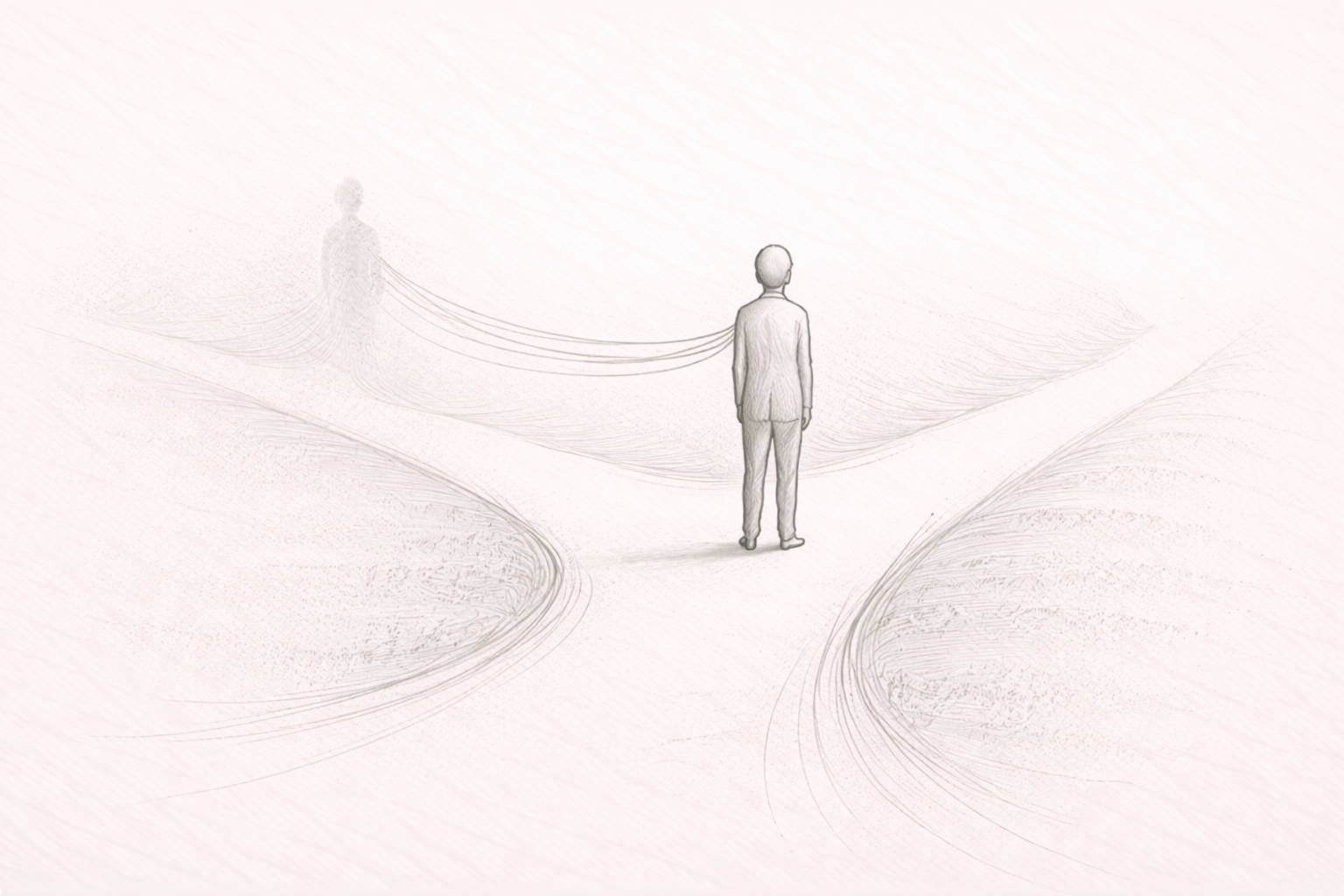

One of the more unexpected lessons my wedding taught me had nothing to do with marriage.
It had to do with changing my mind.
If you’ve been following my writing for a while, you’ll know that my relationship with my father hasn’t always been straightforward. There was a period in my life where creating distance was the healthiest decision I could make, and looking back, I don’t regret it. It was the right decision based on who I was, the circumstances I was in, and everything I knew at that point in my life.
Earlier this year, however, something shifted.
As my husband and I began planning our wedding, it became increasingly clear that I couldn’t keep postponing the question of what role, if any, my dad would play on one of the biggest days of my life.
If I’m honest, there was a period where I wasn’t even sure if I wanted to invite him.
My hesitation wasn’t coming from one particular incident. It came from years of experience. Historically, many of our disagreements happened because he had very strong opinions about how things should be done, and I often found myself feeling unheard or pressured to give in simply to keep the peace. I was worried that inviting him into the wedding planning process would reopen those old dynamics and add unnecessary stress during what was already going to be a busy season.
I didn’t make that decision lightly. I spent many conversations talking it through with my husband, my best friend and my godmother, all of whom knew my history with my dad and understood why I was struggling with the decision. They each shared their perspectives, asked thoughtful questions and reminded me of things I hadn’t considered.
In the end, though, they also reminded me of something equally important.
The decision was mine to make. Nobody else had to live with the outcome except me.
That realisation changed the way I approached the situation. Instead of asking myself whether I should invite my dad, I started asking a different question: based on the relationship we have today, and the person he has consistently shown himself to be over the past few months, what decision would feel most truthful to me?
That subtle shift in perspective changed everything.
One of the first things I did was communicate my boundaries very clearly. I explained what I was comfortable with, what I wasn’t, and what I needed if we were going to have a healthier relationship. To his credit, he listened. He didn’t argue with them or try to negotiate them away. He accepted them, and over the following months I began to notice something that I hadn’t expected.
His actions consistently matched his words.
That may not sound remarkable, but when trust has been broken before, consistency matters far more than grand gestures. I wasn’t looking for a dramatic apology or a single conversation that would magically resolve years of history. What gradually changed my perspective was seeing someone repeatedly choose to respect the boundaries I had set.
As the wedding drew closer, I found myself writing these words for my speech:
「小时候,是你替我做决定;而今天,你选择相信我的决定。对我来说,这份信任,比什么都珍贵。」
When I translated them into English afterwards, I realised why they meant so much to me. “When I was young, you made decisions for me. Today, you’ve chosen to trust mine. To me, that trust is more precious than anything else.”
Those words reflected the relationship we had built over the previous few months. They didn’t erase my childhood, nor were they intended to. They simply acknowledged something that had become true in the present.
The same thought process shaped another decision I made during the wedding.
From the very beginning, I had planned to walk into my solemnisation alone. That decision felt honest because much of the journey that brought me there had been one I had walked independently. I had learnt to navigate depression, moved out on my own, rebuilt my health after cancer, started Crysto.light and slowly built a life alongside people who became my chosen family. Walking into the ceremony alone felt like an authentic representation of that journey.
A few days before the wedding, though, I found myself reconsidering that decision.
As I reflected on the relationship my father and I had built over the previous months, I realised there was a way to honour both my past and my present without compromising either. Instead of asking him to walk me down the entire aisle, I invited him to join me only for the final few steps before placing my hand onto my husband’s.
Looking back, I don’t think I could have made a decision that represented our relationship more honestly. It recognised that much of my journey had been one I walked independently, while also acknowledging the effort he had made to rebuild our relationship this year.
After the wedding, people came up to me with tears in their eyes. Some of them had witnessed parts of my childhood, 20s & early 30s that many people in that ballroom knew nothing about. They knew why there had once been so much distance between my father and me, and they understood the significance of the choices I had made that day. What moved them wasn’t simply that I thanked my dad during my speech. It was that I found a way to honour him without denying my own story.
That conversation stayed with me because it helped me put something into words that I hadn’t fully realised before.
When we’re making difficult decisions about people, I don’t think it’s enough to rely on just one source of information.
If I had based my decision solely on my past experiences with my dad, I probably wouldn’t have invited him to the wedding at all. Those experiences were real, and they shaped the boundaries I eventually put in place. Ignoring them wouldn’t have been wise.
At the same time, I don’t think it would have been wise to make my decision based entirely on other people’s opinions either, regardless of how well-intentioned they were. My husband, my best friend and my godmother all offered thoughtful perspectives, and I’m incredibly grateful for their wisdom. They helped me think more clearly, challenged some of my assumptions and gave me the space to consider possibilities I hadn’t thought of myself.
But none of them made the decision for me.
Ultimately, I had to look at the person standing in front of me, consider the evidence that had accumulated over the past few months, and ask myself whether my old conclusion still reflected the reality I was living in today.
I’ve realised that’s probably how many of our biggest life decisions should be made.
Our past experiences matter because they teach us valuable lessons. Wise counsel matters because other people often notice things we can’t see ourselves. But there comes a point where we also have to take responsibility for our own conclusions by paying attention to the evidence in front of us today.
To me, that’s what discernment looks like. It isn’t ignoring the past. It isn’t blindly following other people’s advice. It’s allowing all three to have a seat at the table, and then having the courage to make a decision you can honestly stand behind.
Additionally, the boundaries I established earlier this year weren’t abandoned when my relationship with my dad improved. They were the very reason the relationship had room to improve in the first place. They created the conditions for trust to be rebuilt slowly, consistently and on healthier terms than before.
I think that’s an important distinction because conversations about family relationships often swing between two extremes. We’re either encouraged to forgive everything because “family is family,” or we’re told that once someone has hurt us, they should never be allowed back into our lives again.
Real life rarely fits neatly into either category.
There are situations where creating distance remains the healthiest and safest decision, and there are situations where someone’s consistent actions gradually invite us to reconsider what we once believed was no longer possible. The difficult part is recognising the difference.
Looking back, I don’t think my wedding taught me that people always change, it taught me something more practical.
Our decisions should continue to reflect reality as it is today, rather than remaining permanently tied to reality as it once was. Sometimes the conclusions that protected us in one season of life are exactly the conclusions we need. At other times, holding onto them long after circumstances have genuinely changed can prevent us from recognising growth, both in other people and in ourselves.
That doesn’t mean abandoning your values or lowering your standards. If anything, I think healthy reconciliation begins with clear boundaries and consistent evidence, not wishful thinking.
If there’s one thing I hope readers take away from this story, it’s this.
Don’t change your mind because someone tells you to.
Change your mind when the compounded evidence changes.
There’s a quiet courage in holding firm when your boundaries need protecting, and there’s an equally quiet courage in revisiting an old conclusion when reality has genuinely changed.
Sometimes, wisdom isn’t choosing between holding on and letting go. Sometimes, it’s knowing when it’s finally safe to meet someone in the middle.