
I think one of the most important conversations the spiritual industry needs to have is this: there is a very real difference between offering clarity and creating dependency, and unfortunately, the line between the two can become blurry very quickly.
Spiritual work often happens during periods where people feel emotionally vulnerable. They may be grieving, confused about relationships, anxious about the future, uncertain about life direction, or trying to make sense of pain that feels overwhelming and difficult to process alone. In those moments, guidance can genuinely help. A good reading can provide emotional grounding, perspective, language for what someone is experiencing, clarity around patterns they could not previously see, or reassurance that they are not imagining what they feel.
That is the healthy side of spiritual services.
But when a service slowly conditions someone to stop trusting themselves without external validation, something has gone wrong. This is where discernment becomes important for both practitioners and clients because a healthy spiritual service should increase a person’s self-awareness and decision-making capacity over time.
The goal should never be to make someone feel like they need a practitioner in order to function. The goal should be to help someone understand themselves more clearly, navigate their circumstances with greater awareness, and eventually feel more grounded within their own judgment and emotional reality.
There is a significant difference between support and reliance. One empowers people while the other quietly weakens them.
I’ve seen people become trapped in cycles where they feel unable to make even ordinary life decisions without repeatedly consulting tarot readers, astrologers, psychics, energy healers, or spiritual practitioners. Should I text him? Should I leave my job? Does this person secretly dislike me? Will this relationship work out? When will my breakthrough finally come? What does this dream mean? Pull cards again. Check another reader. Ask another psychic. Seek another confirmation.
At some point, the issue is no longer a lack of information. It becomes emotional dependency disguised as spiritual seeking.
To be honest, I think some parts of the industry quietly encourage this dynamic because dependency is profitable. A dependent client returns constantly. An anxious client spends more. A fearful client is easier to influence. A confused client keeps searching for certainty.
That is an uncomfortable truth, especially in spaces where fear, urgency, soulmate narratives, karmic contracts, curses, “divine timing,” or twin flame obsession are heavily amplified.
This is also why ethical responsibility matters so much in spiritual work. Whether practitioners realise it or not, they hold influence. People can make serious emotional, relational, and financial decisions based on what they hear during sessions, and that level of influence should be handled carefully.
Personally, I think the healthiest readings are often the ones that gently bring someone back to themselves rather than positioning the practitioner as all-knowing. A good reading should help someone recognise patterns more clearly, understand timing more realistically, and become more aware of where fear, projection, emotional wounds, or avoidance may be shaping their decisions. At the same time, it should still leave room for personal agency.
No ethical spiritual practice should remove a person’s ability to think critically, make grounded decisions, or navigate reality responsibly.
This is also one reason I struggle with overly deterministic spirituality. I dislike frameworks that suggest every outcome is fixed, every difficulty is completely fated, or that practitioners hold exclusive access to someone’s destiny while the person themselves remains powerless. I do not think that approach creates healthier people. More often, I think it creates anxious ones.
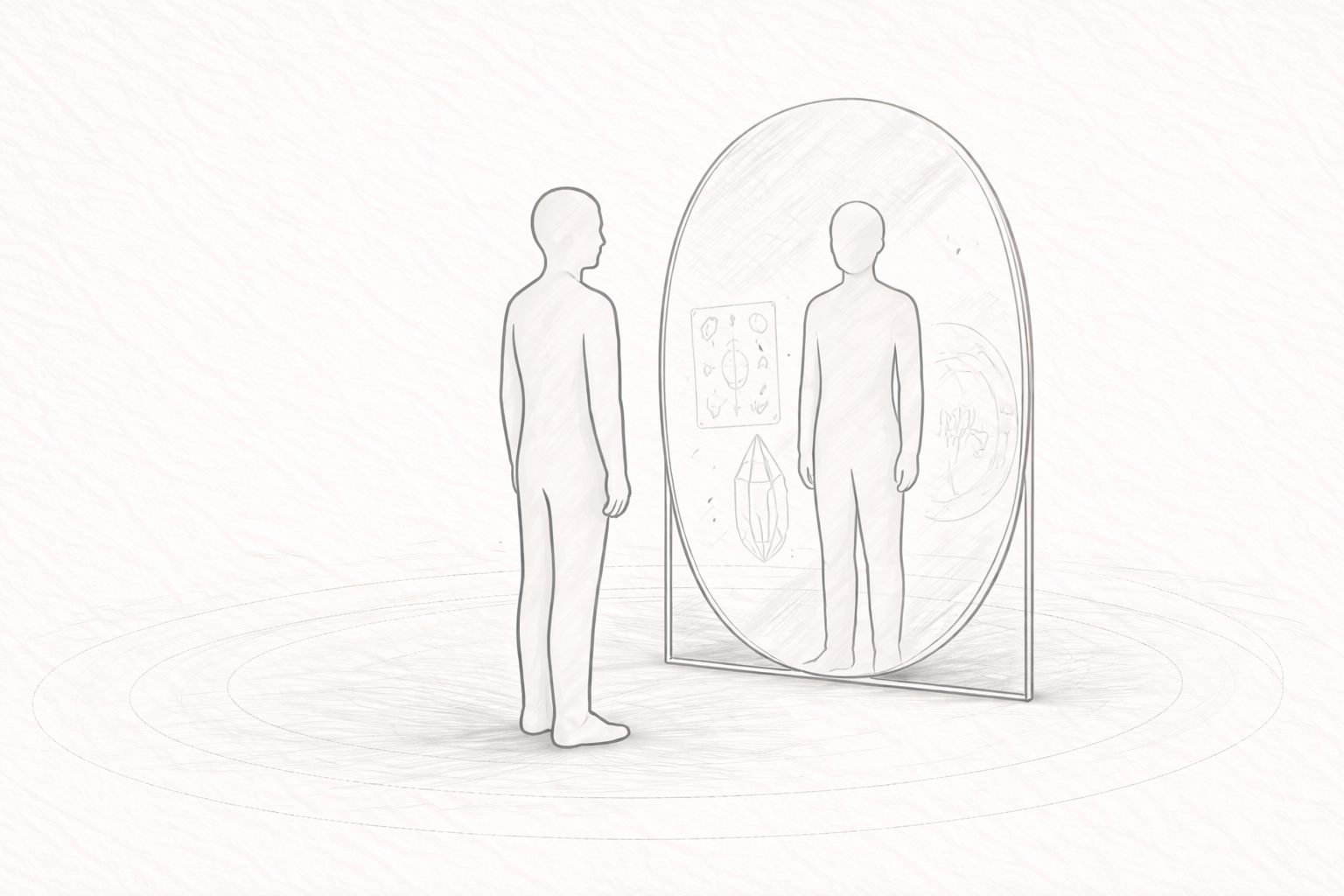
To me, spirituality works best when it functions more like a mirror than a leash. It should reflect patterns, blind spots, emotional truths, timing, and possibilities while still encouraging personal responsibility, discernment, emotional regulation, and real-life action.
I also think clients should feel more grounded after a session, not more fearful, emotionally destabilised, or addicted to reassurance.
Because ultimately, the healthiest spiritual work does not make a person feel smaller. It helps them return to themselves with greater honesty, perspective, emotional clarity, and self-trust than before.