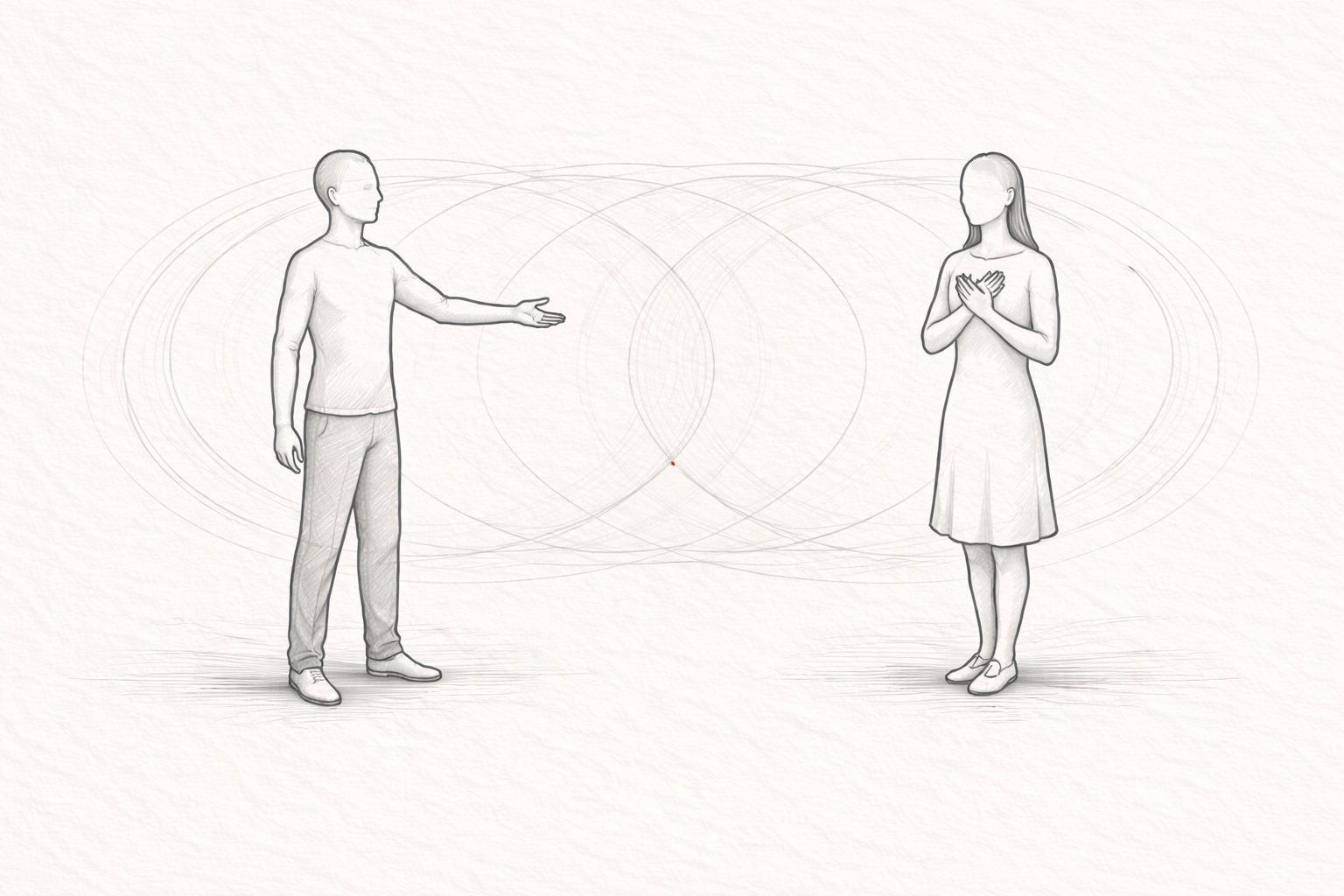

One of the questions I receive most often during synastry consultations is whether two people are compatible. It’s a reasonable question, and compatibility certainly matters. Some people naturally communicate more easily, share similar values or simply understand one another with very little effort. Astrology can often explain why those dynamics exist. Over the years, however, I’ve realised that compatibility isn’t usually the first thing I pay attention to. I’m much more interested in maturity.
That wasn’t always the case. In my 20s, I genuinely believed that if two people felt deeply connected, if the chemistry was strong, if conversations flowed naturally and their values appeared aligned, then the relationship should work. If it didn’t, I assumed we simply weren’t compatible enough.
Looking back now, I realise how much of that belief came from inexperience and, if I’m honest, a rather romanticised idea of what a healthy relationship was supposed to feel like. I equated intensity with intimacy and emotional highs with depth. If someone seemed to understand me immediately, I took that as evidence that we were meant to be together.
What I didn’t understand then was that compatibility and maturity are describing two entirely different things. Compatibility is about fit; it’s about shared interests, similar communication styles, mutual attraction and the feeling that being together comes naturally. Maturity, on the other hand, only really reveals itself once the relationship stops feeling effortless. It appears during conflict, disappointment, misunderstanding and stress. It is reflected in how two people repair after hurt, how they take responsibility for their own behaviour and whether they remain curious about one another instead of becoming defensive.
Looking back, I can now see that some of my earlier relationships were genuinely compatible. On paper, we had many things in common; we shared similar ambitions, values and ways of communicating. The problem wasn’t that we were fundamentally mismatched. The problem was that neither of us knew particularly well how to navigate difficulty. When financial uncertainty, family pressures or career stress entered the relationship, we reacted rather than reflected. We became defensive, avoided uncomfortable conversations or blamed one another. The compatibility was real, but it wasn’t enough to compensate for our lack of emotional maturity.
It took me quite a few years to recognise that I wasn’t simply choosing incompatible people.
I was also participating in relationship dynamics that I didn’t yet know how to navigate responsibly. That was a much more uncomfortable conclusion to reach because it required me to examine my own patterns rather than focusing solely on those of my partners.
I began noticing how often I confused chemistry with emotional safety, how frequently I prioritised feeling understood over taking accountability, and how some of the standards I defended so strongly were, in hindsight, expressions of ego rather than wisdom.
Maturity entered my life gradually.. It looked like learning to pause before reacting, apologising without immediately offering a counterargument, remaining present during uncomfortable conversations instead of mentally withdrawing, and accepting that conflict doesn’t automatically mean a relationship is failing. Perhaps most importantly, it changed my understanding of what a healthy relationship should actually feel like.
In my 20s, I was drawn towards passion, intensity and the reassurance that what we had was extraordinary. Today, what feels far more meaningful is consistency, emotional regulation and the ability to disagree without threatening the security of the relationship itself.
That shift has also influenced the way I approach synastry consultations. When someone asks whether they’re compatible with another person, I still answer the question honestly. Some combinations do flow more naturally than others, and astrology can often explain why. But I’m rarely interested in labelling a relationship as a “good match” or a “bad match.” Instead, I find myself paying closer attention to where misunderstandings are likely to arise, how each person’s emotional patterns may interact with the other’s, what strengths the relationship naturally possesses and where both individuals will need to grow. Those questions matter because awareness creates choice, and choice is where maturity begins.
The older I get, the more convinced I become that compatibility may determine how naturally two people come together, but maturity determines whether they know how to care for the relationship once they’re there. Looking back, I’m genuinely grateful for the relationships that didn’t work, even though I certainly didn’t feel that way at the time. (Hehe) They taught me that being compatible with someone is valuable, but learning how to love another person responsibly is far more important. That distinction has shaped not only the way I approach relationships today, but also the way I read every synastry chart that comes across my desk.