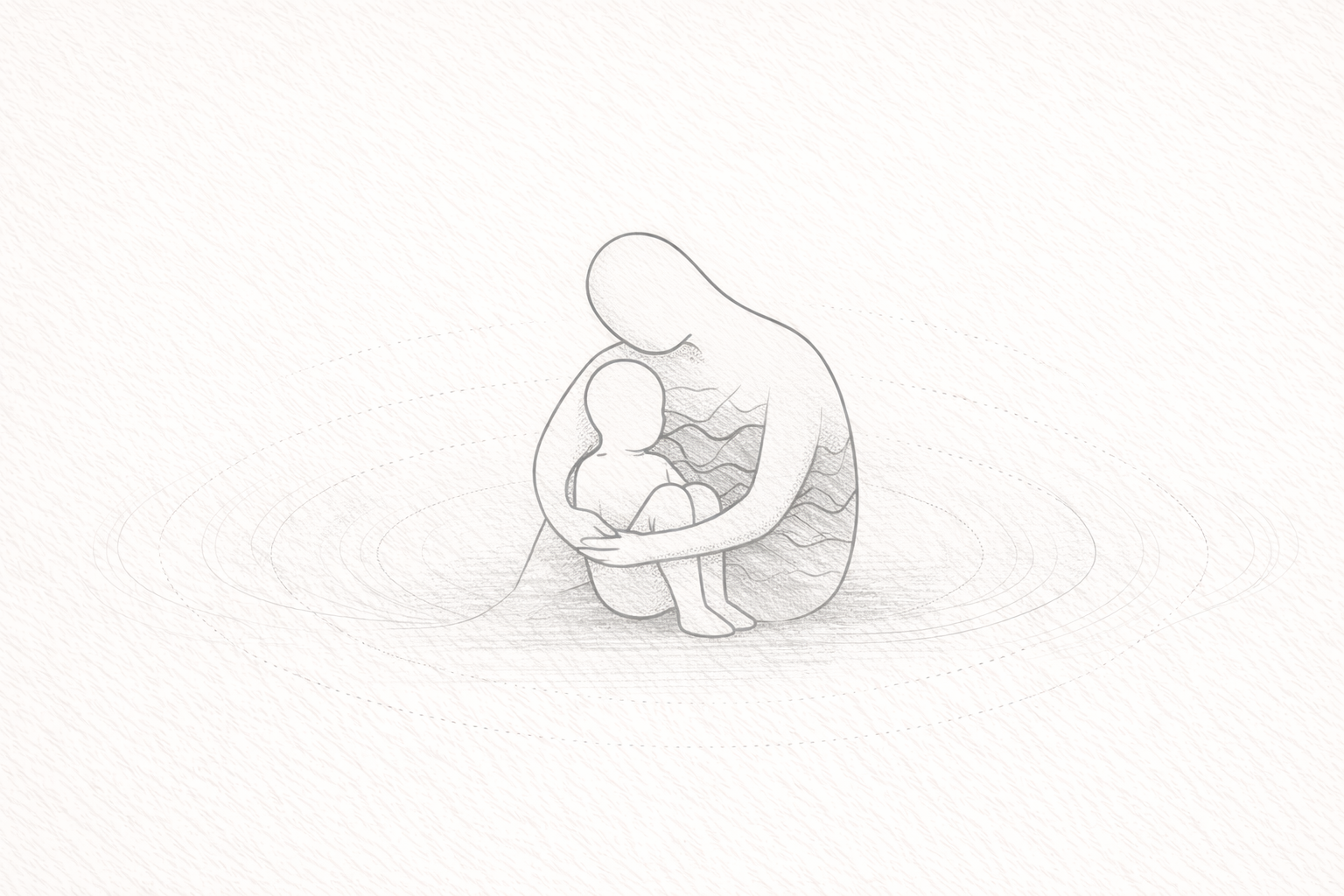

When people hear “difficult mother,” they imagine something obvious. Neglect. Addiction. Violence. Absence. Those stories are tragic, but they are clear. Mine isn’t that simple.
The Girl Before She Became My Mother
My mother did not grow up in safety. She was born in rural East Malaysia into poverty and instability. Her own mother likely lived with severe, undiagnosed mental illness (what I now suspect could have been bipolar disorder) layered with physical abuse and emotional volatility. Her father died early. There was no intervention, no language for trauma, no safety net. Survival was the only education she received.
She married young, like many women who see marriage as a bridge out of hardship. She met my father when he travelled across the border, had me, and went on to have two more daughters. My father was a hardworking man from poverty himself. Through years of risk and persistence, he built a successful business in the early 90s. By the time I was a child, we were living in landed houses. From the outside, we looked stable. Comfortable and provided for.
A Comfortable House, An Unstable Climate
Inside the house, it was a different climate..
My mother’s mood swings were intense and unpredictable. There was crying that felt endless, arguments that erupted without warning, emotional spirals no one could regulate. Sometimes the intensity turned physical. She would throw objects when overwhelmed. I remember one specific incident vividly.. being cornered near a window, her emotions spiralling beyond control, her hands striking my face while I lifted both arms to shield myself. It was not daily violence. It was volatility without containment and that unpredictability is what stayed.
Mental illness in the 90s was not discussed; it was dismissed. My father, unequipped and overwhelmed, would call her a “crazy woman” and withdraw. There was no diagnosis, no therapy, no structured help. Just silence and endurance.
Children do not only grow up in houses. They grow up in emotional weather. Ours changed constantly without warning.
The Memories That Don’t Leave
One of my earliest memories is from a family trip to Phuket. I remember being fascinated by a color-changing watch my mother bought us, mesmerised by the way it shifted shades with temperature. That same trip holds another memory: my grandmother coercing my mother to use a knife to stab my father while my sisters and I, all under nine, were in the room. These are the kinds of scenes that do not disappear. They embed themselves quietly and wait.
Growing Up Hyper-Aware
For years I could not categorise my childhood. We were not neglected. We had food, a domestic helper, education, a roof that never leaked. But there was no emotional stability. Love felt conditional on mood. Safety depended on unpredictability. As a child, I learned to scan the room before speaking, to adjust myself according to the emotional temperature of the day, to shrink quickly when tension rose.
At thirteen, I had my first suicidal thoughts. Not because I wanted to die, but because I did not know how to live inside a home where emotional ground kept shifting beneath me.
Understanding Without Erasing
Much later, as an adult, I began to see my mother with clearer eyes. She was likely unwell. Genetically predisposed, traumatised from childhood, placed into marriage without healing, expected to function as a stable housewife simply because material conditions had improved. Trauma does not dissolve when circumstances upgrade. It follows the nervous system.
Understanding this did not erase the impact. It only removed the confusion.
This is the kind of mother that’s hard to explain.. the one who loved you, who sacrificed in visible ways, who stayed, who tried within the limits of her capacity, and yet was never emotionally safe enough for you to rest. It is complicated to grieve someone who is still alive. It is complicated to hold compassion while acknowledging harm. Explanation is not the same as excuse.
Her history explains her volatility. It does not cancel its effect. My survival is not proof that it was harmless.
The Life I Built After
If I am meticulous about stability now. I am financially independent, intentional about partnership, intolerant of emotional chaos. It is not because I am controlling. It is because I know what instability does to a child. I built my adult life around regulation because I grew up without it.
Not all difficult mothers fit headlines. Some are traumatised girls who were never helped and became women who never healed. Some love deeply and wound unintentionally. Some provide materially and destabilise emotionally at the same time.
If you grew up in a house that looked fine from the outside but never felt safe on the inside, you are not ungrateful. You are not dramatic. You are someone who learned to survive an atmosphere you did not create.
And surviving that is not rebellion. It is resilience.
Choosing Neither
I understand my mother’s story now. I understand where the instability came from, the trauma she carried, the illness that likely went untreated. Understanding has softened the confusion, but it has not erased the impact.
Some parents are hard to explain because they were broken long before they became parents. And some daughters grow strong not because their homes were stable, but because they had to build stability for themselves.
If my father taught me what control feels like, my mother taught me what chaos costs.
And I have spent my adult life choosing neither.