
For many years I struggled to find a way to truly understand astrology, not the surface-level version of it where people memorise keywords for planets and houses, but the deeper structure behind how the system actually works.
Like many people who become interested in astrology, I started by reading widely. Books by different astrologers, online guides, traditional texts, modern interpretations, essentially anything I could get my hands on. Every author seemed to have their own way of explaining the same symbols, sometimes with slightly different nuances and sometimes with interpretations that felt almost contradictory. At first this felt exciting because the subject seemed vast and endlessly layered, but after a while it also became quite confusing.
Certain ideas would appear consistently across different sources, but other explanations seemed to shift depending on who was writing about them. One book might describe a house or planet in one way while another would emphasise a completely different dimension of the same symbol.
Over time, it became increasingly difficult to tell which parts of astrology were foundational principles and which parts were simply the personal interpretative style of the astrologer explaining it.
The more I read, the harder it became to organise the information in my mind because new interpretations would sometimes override what I thought I had already understood, and after a while, it felt as though the pieces of the system were floating around without a clear structure connecting them together.
Eventually I realised that the issue was not the material itself but the way I was trying to learn it.
Most astrology books do a good job explaining individual components of the system such as planets, signs, and houses, but they rarely pause to show how these pieces actually fit together as a coherent structure. Without that framework, it becomes very easy for the meanings to blur into one another, and every new source begins to feel like it is rewriting what you thought you understood before.
This series grew out of my attempt to solve that problem for myself..
Instead of collecting more interpretations, I began reorganising the knowledge in a way that made structural sense to me, looking closely at how the houses relate to one another and how the chart functions as a system rather than as a collection of disconnected keywords.
Over time, this approach made astrology much easier to understand, because once the structure became clearer many of the interpretations that previously felt confusing suddenly started to fall into place. The houses began to reveal clear relationships with one another, and ideas that once felt abstract started to make practical sense.
The intention of this series is not to introduce a new interpretation of astrology but simply to organise the knowledge in a way that is easier to follow, laying out the twelve houses as a structured map of the different areas of life they tend to describe.
What follows is an overview of the twelve houses and how they function together as a system before moving into each house individually.
The 12 Houses in Astrology: What They Really Mean
Astrology has a way of turning complex ideas into simple phrases that travel quickly online. Over time, those phrases begin to sound authoritative even when they only represent a small part of the picture. A house becomes “the house of money.” Another becomes “the house of marriage.” One is labelled the house of death, another the house of hidden enemies.
While these shorthand descriptions can be useful as starting points, they often lose the structural logic that makes astrology meaningful in the first place.
The houses in astrology are not isolated categories, they actually form a system. Each house describes a different area of life experience, and their meanings become clearer when you look at how they relate to one another rather than trying to reduce them to a single keyword.
This series explores the houses in that spirit, as a structured map of the different domains of human life.
The 12 Houses as Areas of Life
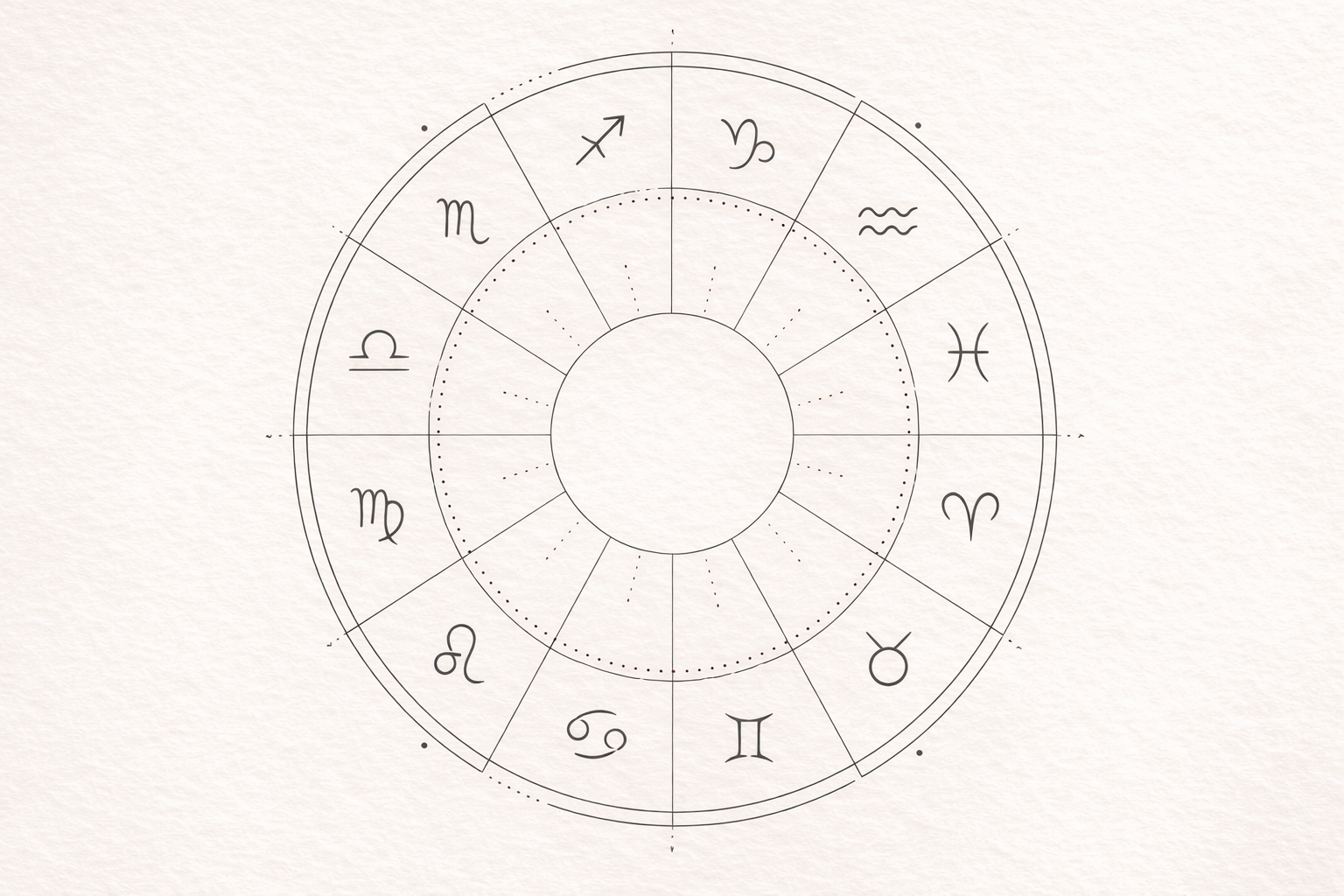
The twelve houses divide the sky into twelve segments, each representing a different domain of human experience.
Some describe personal identity and survival, others describe relationships, work, and social participation. Still, others explore learning, belief systems, and the private inner life.
Together they form a map of how individuals move through the world.
Below is a guide to each house and the role it plays in the larger structure of the chart.
The Personal Houses
These houses describe the development of the individual and the resources that support personal life.
1st House: The Self
The beginning of the chart. It describes the body, personal presence, and the instinctive way someone approaches life.
2nd House: Personal Resources
The things that sustain individual stability. Income, possessions, skills, and the values that shape how someone builds security.
3rd House: Everyday Learning and Communication
The immediate environment of daily life. Conversations, siblings, short journeys, and the small exchanges of information that shape understanding.
The Foundations of Life
These houses describe the private structures that shape personal experience.
4th House: Home and Roots
The private foundation of life. Family, ancestry, and the emotional environment someone grows from.
5th House: Creation and Expression
Personal creativity, joy, romance, and the act of bringing something new into the world.
6th House: Work and Maintenance
Daily routines, responsibilities, and the habits that sustain health and stability.
The Social Houses
These houses reflect the ways individuals interact with others and participate in society.
7th House: Partnerships
One-to-one relationships, contracts, and the experience of encountering another person as an equal.
8th House: Shared Resources
Financial and emotional entanglements with others. Inheritance, debt, trust, and the responsibilities that arise when lives become intertwined.
9th House: Philosophy and Exploration
Higher learning, travel, belief systems, and the search for meaning beyond the familiar environment.
The Public and Collective Houses
These houses describe how individuals move within the wider social world.
10th House: Public Life and Reputation
Career, responsibility, and the roles someone becomes known for in society.
11th House: Community and Collective Goals
Friendships, networks, and the groups people join in pursuit of shared ambitions.
12th House: Retreat and Reflection
The quiet spaces of life. Solitude, healing, spiritual reflection, and experiences that unfold behind the scenes.
Why The Houses Work As A System
One of the reasons house interpretations become confusing online is that they are often presented as isolated meanings. In reality, each house forms a pair with the one opposite it.
1st ↔ 7th
2nd ↔ 8th
3rd ↔ 9th
4th ↔ 10th
5th ↔ 11th
6th ↔ 12th
These oppositions reveal the deeper structure of the chart.
- Self and partnership.
- Personal resources and shared resources.
- Everyday knowledge and philosophical understanding.
- Private life and public life.
Seen this way, the houses become less like disconnected topics and more like a series of balancing forces that shape the experience of living.
Reading the Houses in Practice
When astrologers interpret a chart, the houses do not operate alone. The planets describe the energies active in each area of life. The signs describe the style through which those energies express themselves. The houses describe where those experiences unfold.
Understanding this distinction helps prevent one of the most common mistakes in astrology: assuming a house placement automatically predicts a specific life event.
More often, the houses describe contexts rather than outcomes. They show where certain kinds of experiences tend to appear, but the details depend on the rest of the chart.
Exploring the Houses in Detail
If you would like to explore each house more deeply, you can read the full articles below.
- The 1st House in Astrology: Identity, Presence, and How You Meet the World
- The 2nd House in Astrology: Money, Personal Resources, and What You Value
- The 3rd House in Astrology: Communication, Learning, and Everyday Thinking
- The 4th House in Astrology: Home, Family Roots, and Emotional Foundations
- The 5th House in Astrology: Creativity, Joy, and Personal Expression
- The 6th House in Astrology: Work, Health, and the Systems That Support Daily Life
- The 7th House in Astrology: Partnership, Commitment, and Relationship Mirrors
- The 8th House in Astrology: Shared Resources, Trust, and What It Actually Means
- The 9th House in Astrology: Beliefs, Exploration, and Expanding Your Perspective
- The 10th House in Astrology: Career, Reputation, and Public Direction
- The 11th House in Astrology: Community, Networks, and Collective Aspirations
- The 12th House in Astrology: Solitude, Reflection, and the Unseen Inner World
For many people, understanding the houses is the first step in making sense of astrology because they describe the different areas of life where experiences unfold.
But the houses are only one part of the system.
Astrology also uses the zodiac signs, which describe the different ways energy expresses itself within those areas of life. If the houses show where something happens, the zodiac signs describe how it happens.
Together with the planets, which describe what is happening, these three layers form the basic structure of a birth chart.
If you would like to explore the zodiac signs in the same structured way, you can continue with the companion series:
The 12 Zodiac Signs in Astrology: What They Really Represent
Pingback: The 3rd House in Astrology: Communication, Learning, and Everyday Thinking – Crystolight&You
Pingback: The 5th House in Astrology: Creativity, Joy, and Personal Expression – Crystolight&You
Pingback: The 1st House in Astrology: Identity, Presence, and How You Meet the World – Crystolight&You
Pingback: The 4th House in Astrology: Home, Family Roots, and Emotional Foundations – Crystolight&You
Pingback: The 2nd House in Astrology: Money, Personal Resources, and What You Value – Crystolight&You
Pingback: The 12th House in Astrology: Solitude, Reflection, and the Unseen Inner World – Crystolight&You